Dr. Hina Shah: Empowering Entrepreneurial Children Through School Education
Having pioneered the Entrepreneurship Models which brought impressive tangible results by creating wealth for millions of people in India, Hina Shah believes that an Entrepreneur is a person who has very specialized behavioral competencies that our education system does not focus upon. Seeing this gap, a very special Entrepreneurship Competency development model for school children was designed by her to groom them into successful Entrepreneurs.
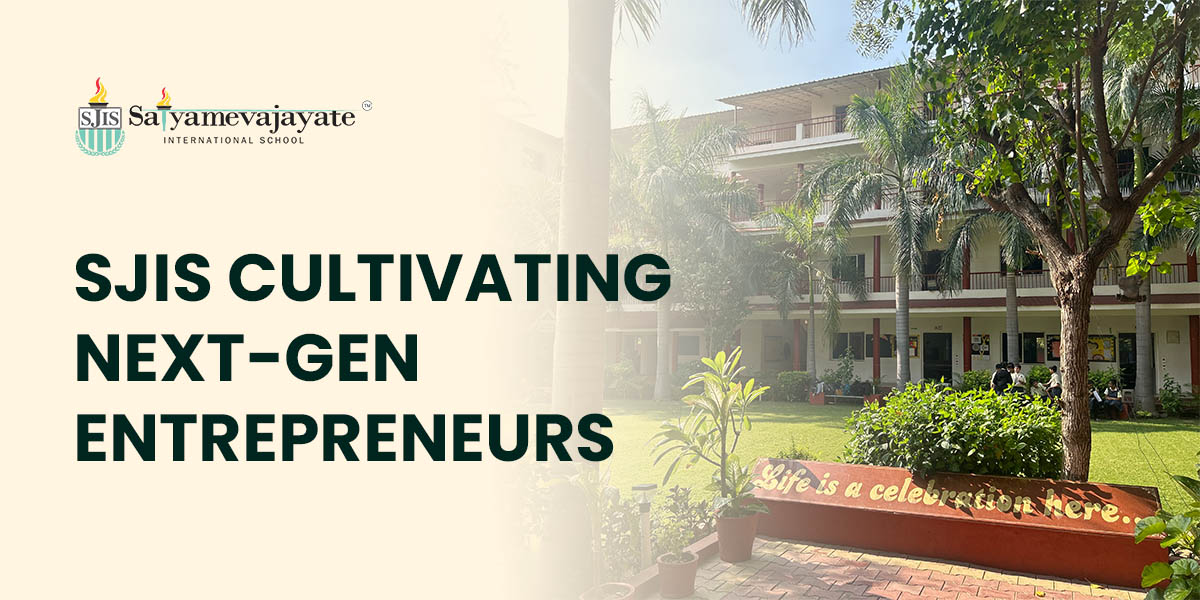
In 2000, she established Satyameva Jayate International School (SJIS) with a mission to nurture a generation of entrepreneurs through her Model for Entrepreneurship Education (MEE), which has been tested and replicated through the years. The model contains 10 exclusive modules (covering 10 years of school) and a step-by step guide, with detailed curriculum, material, kits, etc. These are the modules that can be taught by teachers and parents at home by referring to the teaching guides. The students are given a Workbook for their activities and developing entrepreneurial competencies. Instead of job seekers, they can become job creators! This was the beginning of a revolutionary process for everyone – teachers, students and parents – through this innovative teaching approach in school.
What inspired you to start Entrepreneurship Education in school?
The inspiration to start Entrepreneurship Education was because of my experience of more than 40 years in creating entrepreneurs – men and women of all strata, at the state, national and international levels. A huge unemployment number made me realize there are more job seekers than job creators, and that entrepreneurship development was the only way to address this issue. I believe implementing Entrepreneurship Education (EE) in schools from the primary level days not only shapes the mindsets of young students but also provides the skills and knowledge that are central to developing an entrepreneurial culture.
Why entrepreneurship education from Standard 1?
Entrepreneurship as a concept is not exclusive to entrepreneurs or business-minded individuals, rather it is more of an attitude and a way of life that induces the spirit and inquisitiveness to think in new ways and adapt to life’s challenges. In a dynamic economy like ours where over 50 percent of the population is below age 25, entrepreneurship is a key generator of economic development and innovation.
Several subjects can be simultaneously taught through Entrepreneurship such as math, finance, economics, art, languages, without children even realizing it! During that time, children develop self-confidence which helps them become self-reliant.
Value for money is a hard lesson to teach or learn. However, Entrepreneurship Education ensures children learn easily about money matters for life time. During the teaching, there are times children fail in their projects. Learning from failure is an essential skill for entrepreneurs. To do this, Entrepreneurship Education helps children to see business opportunities everywhere.
Letting children make decisions, implementing them and learning from the outcomes (success or failure) is an interesting component of Entrepreneurship Education in the MEE Model.
What are the salient features of the Model on Entrepreneurship in Education (MEE) for Schools?
Satyameva Jayate International School is the only school in India that teaches Entrepreneurship from classes I-X in regular classrooms with experiential learning process. As attitudes and cultural references take place at an early age, entrepreneurship education covers attitude, knowledge and behaviour development to acquire:
Self-esteem – where we build a high self-esteem within children, which makes them loving, unique, spontaneous, different, adventurous, creative and fearless.
Self-worth – Self-worth cannot be damaged or taken away, it is always there. But for many students, it lies hidden behind defensive walls. Entrepreneurship Education and learning makes children/students realize their Self Worth.
Self-reliance – Entrepreneurship teaching encourages developing Entrepreneurial competencies to be reliant on one’s own powers and resources rather than on others.
Message to parents and teachers of our country
Modern day jobs require its employees to have entrepreneurial mind-sets. Entrepreneurship skills also stimulate curious minds and help children challenge the status quo as against following rules blindly.
Today work/jobs require employees to be more entrepreneurial and the various Entrepreneurial Competencies like initiative taking, strategic planning, persistence, influencing, problem solving and decision making, commitment towards quality and work efficiency, etc. are required on a daily basis.
About Us
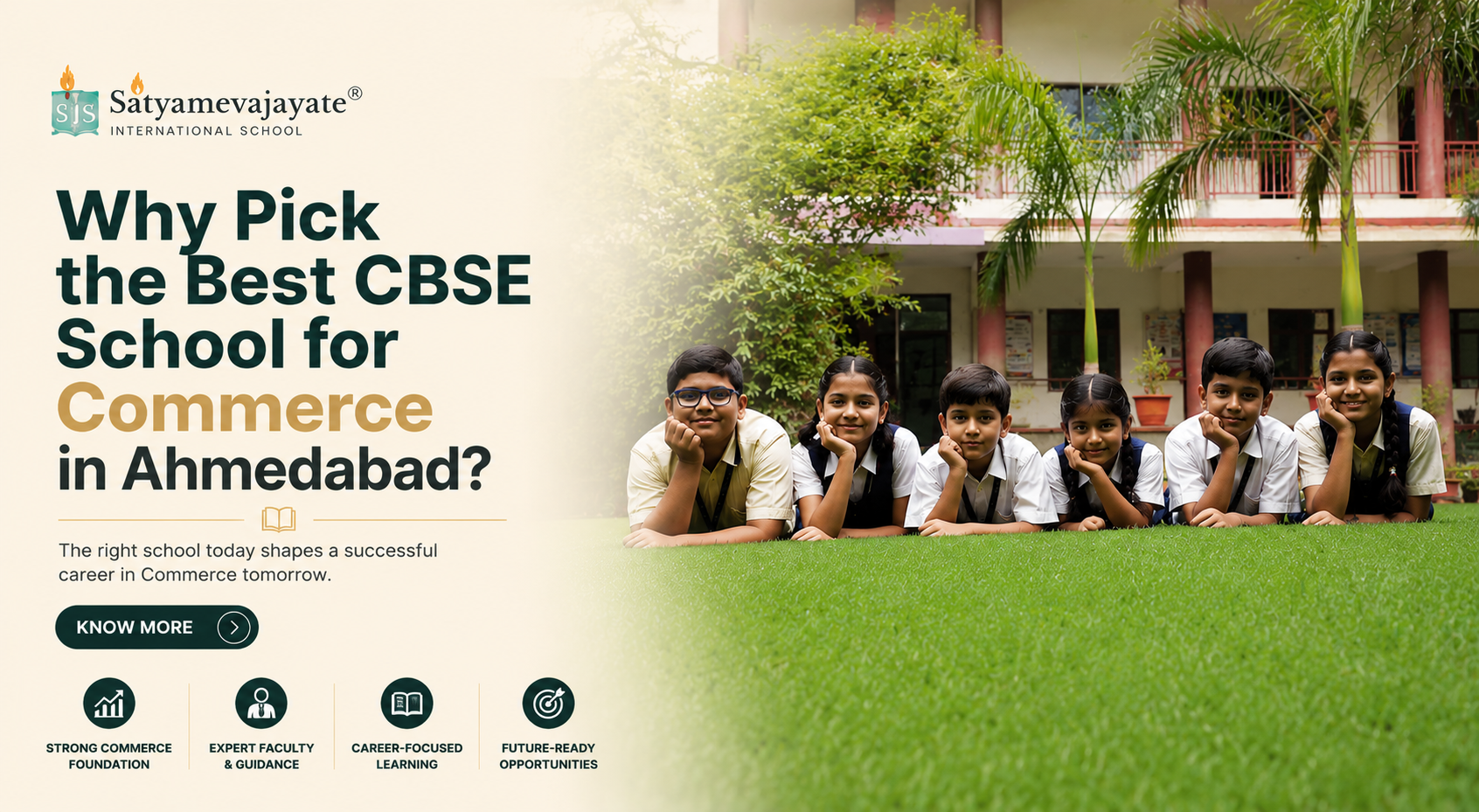
Satyameva Jayate International School is the Best CBSE school in Ahmedabad. The school was founded in 2000 by Dr. Hina Shah (Founder & Director) in a small building with a handful of students